
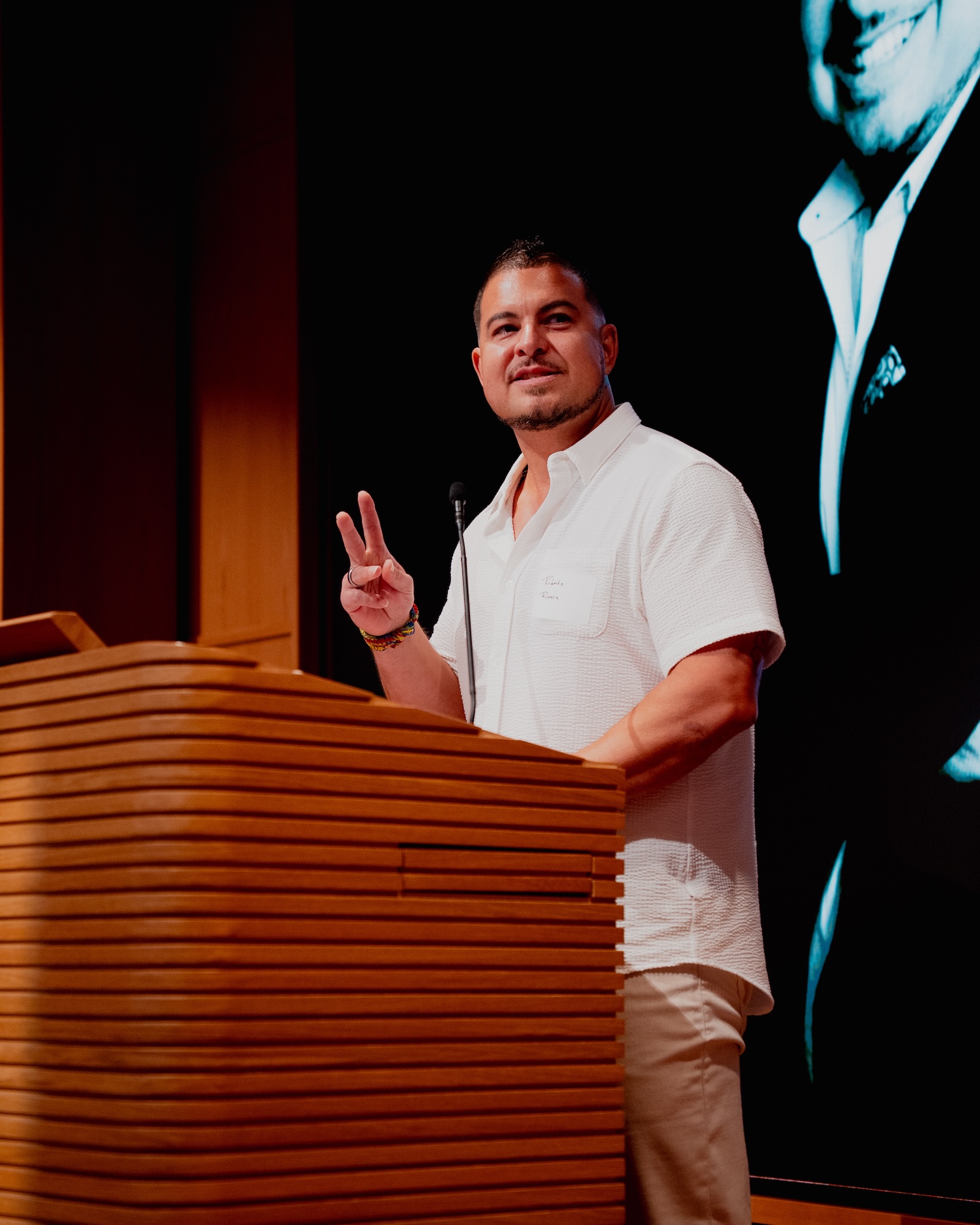
Recently, I had the opportunity to give a talk at Salesforce Tower in downtown Chicago during an art exhibition and fundraising event for The Alliance 98, known as TA98, a Chicago-based creative youth development organization. As chair of the board, I found myself reflecting on more than twenty years of working in youth development and education spaces and considering how my understanding of lasting change has evolved during that time.
For much of my career, I wanted to create programs and initiatives that could sustain themselves over time. I wanted good work to continue after the initial funding disappeared or the excitement surrounding a new initiative faded. I still believe sustainability matters, but I have increasingly come to believe that sustainability alone does not go deep enough to describe what many of our communities actually need.
Sustainability helps us maintain what we have built through programs, skills, structures, and strategic processes, but changing conditions can quickly make those efforts fragile. Leaders leave, funding disappears, priorities change, and political climates can shift seemingly overnight.
Regeneration goes deeper by grounding people in knowledge of self, culture, and community while cultivating relationships, shared vision, and the capacity to meet the challenges of today alongside those that have not yet emerged. Instead of simply asking whether something can survive, regeneration asks whether we are laying a foundation from which people and communities have the capacity to lead, adapt, create, and grow in perpetuity.
My relationship with David Rojas and TA98 has helped me understand that distinction in a deeply personal way. I met David when he was sixteen and attending Social Justice High School on Chicago's West Side. Our elder and friend Rito Martinez had given me the opportunity to bring a culturally grounded program called Fulfill the Dream into the school, where we brought local artists together with young people to develop leadership, relationships, scholarship, and a commitment to community. We used to joke that we were helping young people get their "ships" together, but beneath the humor we took seriously the idea that young people could develop the critical thinking, creativity, relationships, and social and emotional capacities they needed to uncover the community cultural wealth assets their communities possess and thereby address longstanding problems that their communities faced.
David stood out because he could take an idea, put it into practice, bring people together around it, and create experiences where people felt that they belonged and had agency. He and a handful of other young leaders, including Zeni Gonzales, believed North and South Lawndale should gain recognition for their talent, beauty, creativity, and youth power. Together, they helped create Hip Hop Revival, an event that brought communities together through breaking, MCing, graffiti, DJing, and performance. Nearly twenty years later, people still gather for Hip Hop Revival, now called Lawndale Fest. The form has evolved, but the deeper vision and purpose persist. The effort was more than sustained; it was regenerative.
David eventually earned a Posse Scholarship and prepared to attend college out East. After his high school graduation, I took him to a steak dinner to celebrate, and he told me that although he felt excited, he also felt nervous because he had not spent much time in classrooms with white or Asian students and did not know what to expect. Chicago remains an incredibly racially segregated city, so his concern made sense. I shared a quote I had heard about courage not representing the absence of fear but rather action in the face of fear. I told him that perhaps feeling fear was an invitation to practice courage.
David took that challenge seriously as he became involved with the Hispanic Student Department, the Black Student Union, worked with young people in the surrounding community, brought Hip Hop Revival to campus, studied abroad, and continued expanding what he imagined possible for himself. As I watched him confront his fears, however, I had to confront a question of my own about where I allowed fear to hold me back. David’s action in light of my encouragement was regenerative for me.
I had done well in my master's program, but fear had kept me from pursuing a doctorate. Eventually, I took the GRE, applied to a highly regarded doctoral program where I could study social and emotional learning, and pursued a fellowship that would pay for my schooling while providing resources to continue my work. To my surprise, the university accepted me into the program and awarded me the fellowship. The compost of David’s actions enriched my own imagination for myself.
That same summer, David returned home with the 100 Projects for Peace grant, a global award for undergraduates leading grassroots projects that address the root causes of conflict. He used it to pilot the seeds of what would eventually become TA98. I remember telling him that the courage I had once encouraged in him had come back and changed my own life. That experience taught me something important about the reciprocal power of regenerative relationships. Sometimes we believe we are helping a young person find their way, only to discover that they are also helping us find ours.
Years later, while studying the intersection of social and emotional learning, social justice, and culturally sustaining education, I began looking back at Fulfill the Dream. The program itself had not survived at Social Justice High School. Leadership changed, staff moved on, students graduated, and the school eventually moved in different directions. For a while, I wondered whether those changes meant that we had failed, but eventually I realized that I had framed the question incorrectly. Instead of asking whether the program survived, I needed to ask what knowledge people carried forward, what relationships remained, and what had taken root.
That question led me into a deeper inquiry as I began studying communities around the world where young people who had historically experienced marginalization were thriving and where the work had endured for decades despite changes in leadership, policy, funding, and social conditions. In several Indigenous-led spaces, I encountered communities operating from what I have recently come to understand as a regenerative paradigm informed by Mother Nature. Their work drew strength from culture, radically loving relationships, authentic community decision making, and a commitment to justice. Programs could change because the deeper roots continued nourishing the work.
Today, David and TA98 have returned to Social Justice High School, where young people continue to think critically, create, build community, and act for justice. Although the original program no longer exists, much of what we hoped to cultivate continues to grow in forms appropriate for this moment. I have come to understand regeneration through examples like this, where the longevity of an idea depends less on preserving its original form and more on cultivating people and relationships capable of carrying its deeper vision and purpose forward.
Mother Nature has also helped me understand why some approaches persist across generations while others struggle to survive changing conditions. Industrial monocrop agriculture provides one useful metaphor. This approach clears a field to grow one crop efficiently and at scale, often placing rows and rows of the same crop next to one another. Although this approach can produce impressive short-term results, its sameness can also create vulnerability. A lack of biodiversity can leave crops vulnerable to disease, pests, and changing environmental conditions, while maintaining production can require increasing interventions that eventually diminish the health of the soil itself.
I sometimes see a similar pattern in education and youth development, especially when we situate students in rows and rows of desks, offer young people a standardized program, and then wonder why it does not engage them. When engagement declines and attendance dwindles, young people often vote with their feet, and our response frequently involves adding another intervention. We can generate tremendous activity without necessarily producing meaningful outcomes, and sometimes those interventions continue even when they cause harm. This paradigm rarely stops long enough to ask young people, families, artists, elders, and neighbors what already grows in their community, what cultural values they hold, what gifts they carry, or what they want to grow next.
Regenerative agriculture offers a different metaphor through traditions such as the Three Sisters, which Indigenous peoples across North and Central America have practiced in various forms for generations, including my people, the Matagalpa of Northern Nicaragua. Corn, beans, and squash grow together in a mutually supportive relationship. Corn provides structure for the beans, beans contribute to the health of the soil, and squash spreads across the ground in ways that help retain moisture and limit weeds. Together, they create conditions that support the fruitfulness of each plant without requiring any one of them to thrive alone.
People and communities obviously function with far greater complexity than plants, but the metaphor offers an important lesson. None of us thrives entirely on our own, and personal wellbeing remains deeply connected to communal and organizational wellbeing. Regeneration therefore asks us to pay attention not only to the individual program or intervention but also to the relationships and conditions surrounding it.
TA98 offers a living example of this principle. The organization begins by recognizing resources already present in its environment and community, what scholars call community cultural wealth. The languages spoken in the community become part of the culture of the organization. Young people's artistic forms of expression receive platforms rather than being treated as distractions from learning. The organization responds when neighbors face threats and injustice, incorporates familial and cultural ways of being into programming, and supports young people in imagining possibilities beyond what they have previously seen accomplished.
This orientation also shapes relationships among staff, young people, and community partners. Staff need structures through which they can articulate what they require to feel supported, safe, and well because adults who hold up the work with young people also need opportunities to thrive. Young people need support from adults while also having opportunities to become co-constructors who shape experiences for themselves and their peers. Community partners extend what becomes possible by contributing different forms of knowledge, opportunity, relationships, and care. Through efforts such as the Community Youth Opportunity Collaborative, young people can even identify the measures of wellbeing that matter to them, gather knowledge from their peers, and use what they learn to help guide organizational and community change.
I invite you to consider your work through the lens of regeneration. Perhaps a program you began failed to continue, but did the underlying effort really stop, or did it take on a new form more appropriate to the needs of the community now? If we refocus on regeneration, it takes the focus off us, our projects, programs, and individual contributions, and helps us see the spaces we serve as ecosystems. If you are interested in exploring this concept of regeneration, stay in touch and watch for more articles!
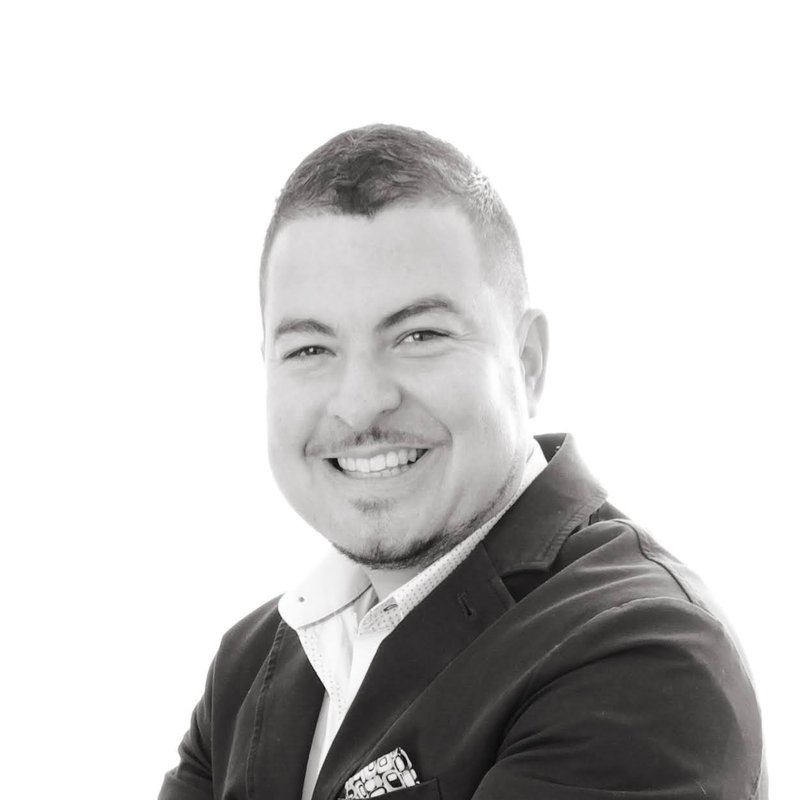
Roberto Rivera, Ph.D., is Co-Founder and Chief Executive Officer of CADRE LLC, a Chicago-based company that develops software to improve the wellbeing of individuals, communities, and future generations. CADRE currently works in education, co-creating thriving school ecosystems that prioritize the wellbeing of administrators, teachers, and students.
A global leader in culturally sustaining approaches to healing, wellbeing, and social and emotional learning, Roberto has spent more than 25 years doing community-based youth development and education work with school communities around the world. Labeled an “at-risk student” with learning disabilities as a teen, he went on to earn a B.A. in Social Change, Youth Culture and the Arts from the University of Wisconsin–Madison, and a master’s degree in Youth Development and a Ph.D. in Educational Psychology from the University of Illinois Chicago, where he was a predoctoral fellow with the Social and Emotional Learning Research Group and a research collaborator for CASEL.
Named one of the “Top Young Change Agents in America” by the Search for Common Ground Coalition, Roberto received the University of Wisconsin–Madison’s 2018 Forward Under 40 Award, and his work is part of the permanent “Upstander” exhibit at the Illinois Holocaust Museum. He is a loving husband and proud father of three boys: Phoenix, Justice, and Lorenzo.
Want the next article in your inbox? Sign up for CADRE's newsletter below.